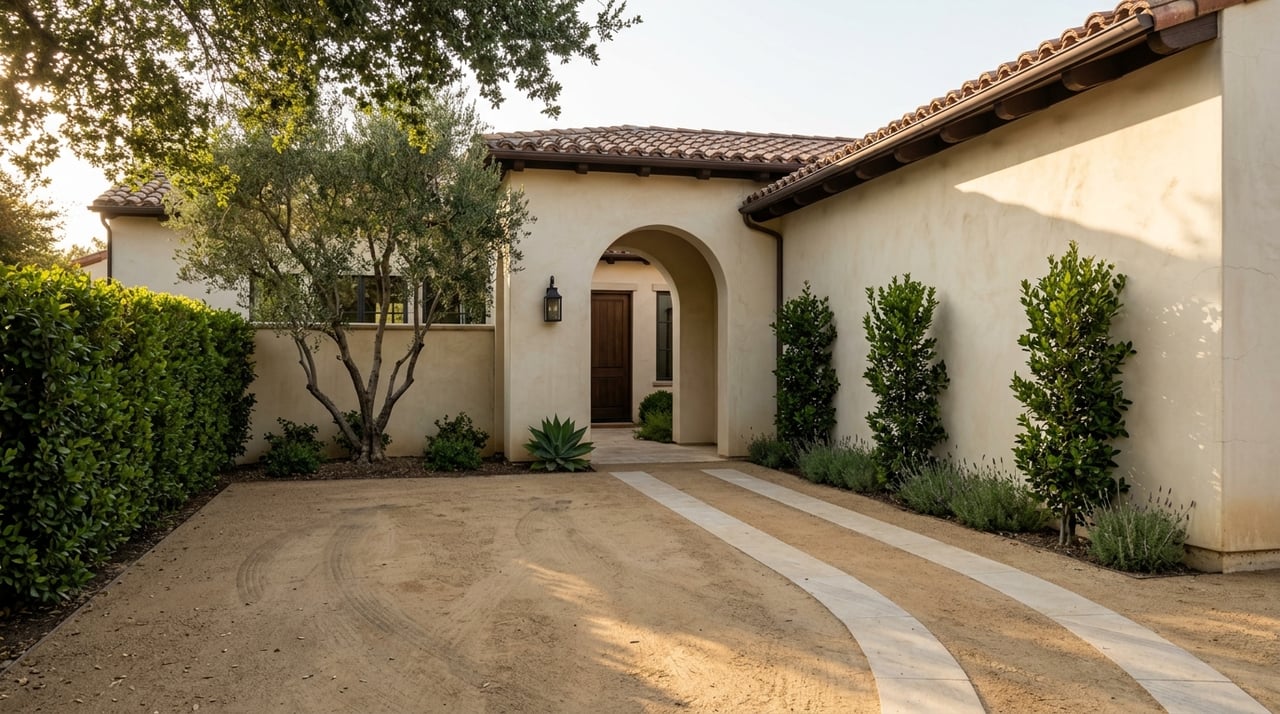
Privacy is one of the first things many buyers ask about in a Montecito estate, but here is the key point: in Montecito, privacy is not just about gates or hedges. It is a site-planning question shaped by Santa Barbara County rules, topography, sightlines, access, and what may or may not be approved later. If you are planning an estate purchase with privacy in mind, knowing how to evaluate these details early can save time, expense, and frustration. Let’s dive in.
Why privacy starts with the site
Montecito is an unincorporated community, so privacy planning is guided by Santa Barbara County plans and codes rather than a city ordinance. County standards emphasize how a property relates to topography, open space, public views, neighborhood compatibility, and privacy.
That means a private estate is not simply the one with the tallest hedge or the grandest gate. It is the one where the home, guest areas, outdoor living spaces, and arrival sequence are positioned thoughtfully on the parcel from the start.
For you as a buyer, this changes the conversation. Instead of asking only whether a property feels private today, you also need to ask why it feels private and whether that privacy is durable.
Evaluate sightlines first
When you tour a property, start with visibility from every angle. Look at what can be seen from the street, from neighboring homes, from upper-story windows, from terraces, and from the pool or guest parking areas.
In Montecito, homes with upper stories or heights above 16 feet may trigger privacy-focused design standards. Upper-story decks and balconies facing adjoining property may need greater setbacks, and upper-story windows near side or rear property lines may require higher sill heights, screening, or obscured glazing.
This matters because upper-level privacy can be very different from ground-level privacy. A property that feels secluded in the garden may still have direct lines of sight into bedrooms, terraces, or entertaining areas.
Questions to ask during a showing
- Where are the clearest views into the house or outdoor living areas?
- Do neighboring upper floors overlook the pool, terrace, or lawn?
- Does privacy depend on mature landscaping, and if so, how established is it?
- If screening is limited today, what changes might require County or Board of Architectural Review input?
Daytime privacy and nighttime privacy are different
Many buyers focus on privacy in daylight, but nighttime visibility deserves its own review. Once interior lights are on and outdoor spaces are illuminated, a property can feel much more exposed.
County lighting standards in Montecito limit light spill at property lines, set color temperature caps for security and other fixtures, and include nighttime shutoff rules in residential areas. In practice, that means lighting can support privacy, but it must be designed carefully and within the applicable standards.
When you visit an estate, it helps to think beyond the daytime showing. Ask how the property feels after dark, especially around entry courts, motor courts, outdoor dining areas, and glass-walled living spaces.
Landscaping is part of the privacy plan
In Montecito, landscaping is often one of the most effective privacy tools. County standards allow perimeter hedging and landscape screening in some cases, and mature planting can soften sightlines in a way that feels natural to the area.
Still, landscaping should be evaluated practically. If privacy depends on new plantings, the real question is how long they will take to mature and whether the property feels sufficiently private in the meantime.
A well-planned landscape buffer can be elegant and effective, but it is not always instant. If immediate privacy is a priority, existing maturity matters.
What to look for in privacy screening
- Mature perimeter hedges rather than newly installed screening
- Layered planting that shields key living areas
- Screening around upper-level windows or balconies where needed
- Landscape design that works with the home’s siting and topography
Gates, walls, and frontage need careful review
Buyers often assume they can add a taller wall, a more substantial gate, or more screening after closing. In Montecito, that may be possible, but it is not something to assume.
County code provides some exemptions for fences, walls, and gates, including certain height thresholds in front, side, and rear setbacks. For example, in front setbacks, fences, walls, and gates up to 6 feet high and gateposts up to 8 feet can be exempt from planning permit review, while taller structures may trigger additional review.
Because Montecito’s exterior changes may also be reviewed for appearance in the unincorporated county, visible changes to gates, frontage, and screening can carry design implications as well as permitting implications. This is especially important if your privacy plan relies on future modifications.
Coastal parcels require extra caution
If you are buying near the shoreline or in a visually sensitive area, privacy planning becomes more nuanced. Montecito overlay standards place weight on topography, scenic views, and compatibility, and coastal code constraints can limit what may be added later.
County code notes that fence, wall, and gate exemptions may not apply in or near wetlands, beaches, environmentally sensitive habitat areas, within 50 feet of a coastal bluff, or where work could adversely affect public access or scenic views. For a buyer, this means coastal privacy improvements should never be treated as automatic.
On these properties, permit history, coastal review history, and survey details are especially important. What appears to be a simple future upgrade can be much more constrained than expected.
Arrival matters as much as seclusion
A private estate should feel calm on arrival, but access still has to work. In Montecito, driveway and gate design are closely tied to emergency access standards, so privacy features must function alongside practical circulation.
Montecito Fire’s plan-submittal checklist requires a fire-access and water-supply site plan with details such as access dimensions, slope, paving material, turnouts, turnarounds, gate setback and width, hydrant location, utility shutoffs, and distance to the furthest part of the structure. For a single parcel or dwelling unit, the fire-access roadway or driveway width is 14 feet, and gates generally must be set back 30 feet from the pavement or right-of-way with an opening at least as wide as the roadway.
For you, the takeaway is clear. A beautiful gate can support privacy, but it cannot create bottlenecks for guests, deliveries, service providers, or first responders.
Access details worth checking
- Whether the driveway width appears consistent with the property’s access needs
- Whether a gated or dead-end drive has adequate turnaround space
- Whether the gate setback allows vehicles to queue off the roadway
- Whether service access is discreet without compromising function
Privacy should work for daily operations
Large estates often involve more than owner arrival. You may have guests, housekeeping, landscaping teams, security vendors, package deliveries, and ride-share pickups to consider.
That is why privacy should include circulation planning. Ask where visitors park, where vendors enter, and how trash, recycling, and loading are handled so the front approach stays visually orderly.
A home can look private in listing photos yet feel busy or exposed in real life if service flow crosses the main arrival court. The best estates separate these functions gracefully.
Shared driveways and easements can affect privacy
If a property uses a shared driveway or access across another parcel, verify the route and easement details carefully. Montecito Fire requires access and water easements to be shown with dimensions, and those widths should generally support the proposed access need.
From a privacy standpoint, this matters because shared access can affect how secluded an estate truly feels. You want to understand not only legal access, but also who uses it, how often, and how visible the route is from the home’s primary living areas.
Vegetation must balance privacy and clearance
Privacy landscaping in Montecito also has to coexist with fire-access requirements. Montecito Fire requires 13.5 feet of unobstructed vertical clearance over fire access and places vegetation maintenance responsibility on property owners along private roadways and, in many cases, public road frontage.
The practical result is that dense planting near driveways and access roads cannot be planned in isolation. Hedges and trees may create a stronger privacy edge, but they also need to be maintained so access remains compliant and functional.
Guest structures need legal clarity
For some buyers, privacy includes creating separation between the main residence and guest accommodations. In Montecito, detached guesthouses, artist studios, and cabañas deserve careful review.
County standards state that these structures are not dwellings unless specifically permitted as ADUs or JADUs. If you are counting on a detached structure for long-term family use, staff support, or concierge-style guest hosting, confirm what the structure is legally allowed to be before you rely on it.
A smart privacy due-diligence checklist
If privacy is central to your purchase, your due diligence should go beyond aesthetics. You want to confirm both current conditions and what is realistically possible in the future.
Documents and approvals to request
- Permit history
- Board of Architectural Review approvals
- Fire clearances
- Title exceptions
- Access and utility easements
- Private road agreements, if any
- Coastal review history, if applicable
On-site issues to verify
- Main sightlines from street, neighbors, and upper levels
- Maturity and effectiveness of existing screening
- Gate placement and driveway function
- Service access and guest flow
- Vegetation clearance along access routes
- Legal use of detached guest structures
Privacy planning is part of buying well
In Montecito, privacy is rarely just one feature. It is the result of site design, code constraints, landscaping maturity, lighting choices, access planning, and careful due diligence.
If you approach an estate purchase with that broader lens, you can make a more confident decision. You are not just buying a beautiful home. You are evaluating how well the property can protect comfort, discretion, and ease of living over time.
If you would like discreet guidance on evaluating privacy, access, and long-term estate fit in Montecito, Montecito Luxury Group offers a tailored, concierge-led approach designed for complex property searches.
FAQs
What does privacy planning mean for a Montecito estate purchase?
- Privacy planning in Montecito means evaluating the property’s site layout, sightlines, screening, access, lighting, and any County review or code limits that may affect future changes.
Do Montecito estate privacy upgrades always need approval?
- Not always, but some gates, walls, fences, frontage changes, and other visible exterior improvements can trigger review depending on height, location, and site conditions.
How do upper-story windows and decks affect Montecito estate privacy?
- County standards include privacy-specific rules for some two-story homes or homes over 16 feet in height, including possible setback, screening, or obscured-glazing requirements near adjoining properties.
Why should Montecito buyers review privacy at night?
- Nighttime privacy can differ significantly from daytime privacy because interior illumination and outdoor lighting may make living areas more visible even on a secluded parcel.
What should buyers know about gates and driveways in Montecito?
- Gates and driveways need to support privacy while also meeting practical access expectations, including fire access width, clearance, setbacks, and turnaround needs in some cases.
Are coastal Montecito estates harder to modify for privacy?
- They can be, because coastal parcels may face added constraints where fences, walls, gates, or other changes could affect scenic views, public access, bluffs, wetlands, beaches, or sensitive habitat areas.
Can a detached guesthouse in Montecito be used as a full private residence?
- Not automatically, because guesthouses, artist studios, and cabañas are not considered dwellings unless they are specifically permitted as ADUs or JADUs.