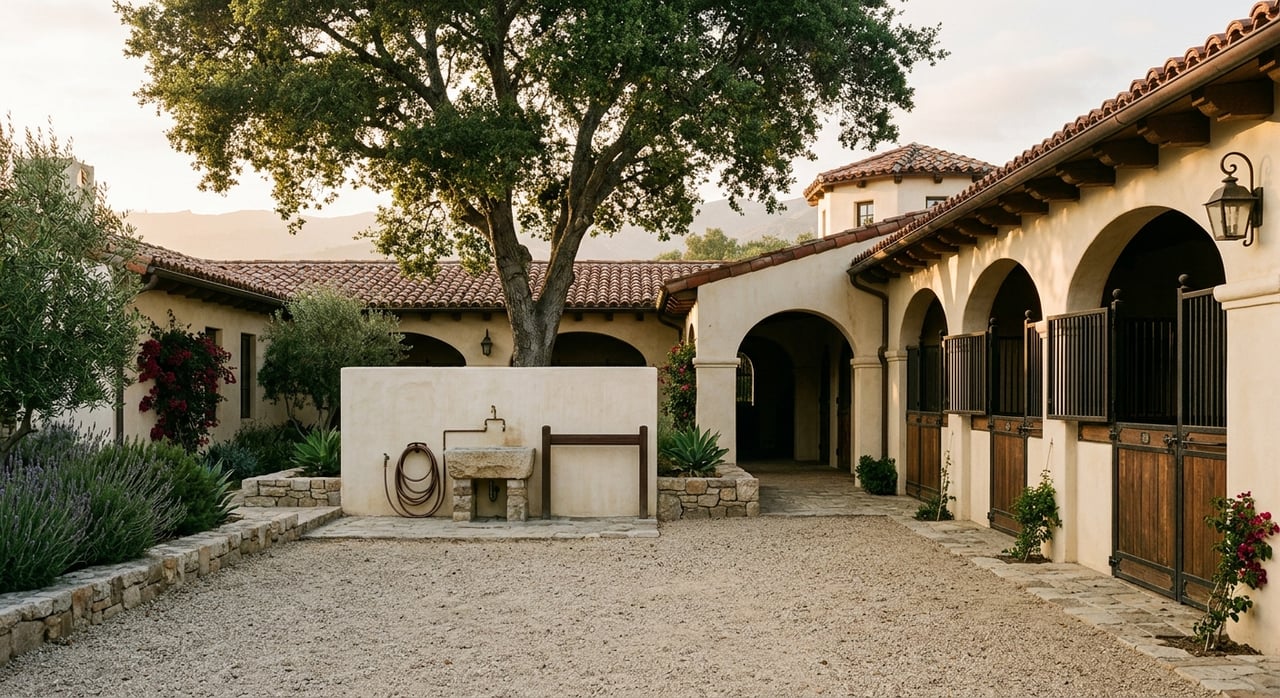
If you picture Montecito as a wide-open ranch market, you may miss what actually makes these properties special. In this part of Santa Barbara County, equestrian and ranch-style real estate is usually less about large-scale agriculture and more about estate living with room for horses, gardens, and a carefully planned outdoor lifestyle. If you are considering buying or selling in this niche, understanding land use, water, trails, and site constraints can help you make smarter decisions from the start. Let’s dive in.
Montecito Is Primarily an Estate Market
Montecito is best understood as a luxury estate community with a low-intensity, semi-rural character. The Montecito Community Plan is designed to preserve that setting, and much of the area is shaped around single-family homes on larger parcels.
That matters because the label “ranch property” can mean something different here than it would in a more agricultural part of California. In Montecito, many so-called ranch properties are better described as estate-scale or hobby-scale properties with horse potential, garden space, or small-scale agricultural uses that depend heavily on the parcel.
The planning framework also supports this distinction. The community plan identifies mostly residential land use patterns, and only one agriculturally designated parcel within the planning area. In practical terms, acreage alone does not make a property a working ranch.
Why Parcel Review Matters More Than Acreage
A common mistake is to focus first on the number of acres. In Montecito, that is only the starting point.
The county’s planning materials make clear that land use and residential density are assigned at the parcel level, and zoning is mapped to match the community plan. Before you assume a property can support horses, a barn, paddocks, or expanded accessory structures, the right first step is a parcel-specific zoning review.
Site design standards also play a major role. Montecito’s development standards consider lot size, floor area, setbacks, grading, privacy, landscaping, and view impacts, which means improvements tied to equestrian or ranch-style living can trigger broader planning questions.
For buyers, that means the real question is not just “How much land do I have?” It is “How usable is this land for the lifestyle I want?”
Features That Can Affect Usability
Several parcel conditions can shape what is realistic on a Montecito property:
- Slope and grading requirements
- Drainage patterns and floodplain concerns
- Access for vehicles, trailers, and emergency response
- Creek setbacks or environmentally sensitive areas
- Privacy, view, and landscaping review standards
- Space for barns, paddocks, turnouts, or service areas
A beautiful parcel may still have meaningful limits. Steep slopes, fire-hazard zones, and drainage issues can all affect how easily a site can support horses or agricultural-style improvements.
Equestrian Appeal Often Comes Down to Access
In Montecito, equestrian value is often tied to access and connectivity rather than sheer acreage. The community plan specifically supports preserving, improving, and expanding hiking and equestrian trail opportunities where compatible.
That is an important detail for buyers who want an outdoor lifestyle. A property near a broader trail network may offer a very different experience from one that simply has open land but no practical riding connections.
Still, proximity is not the same as direct access. A nearby trail does not automatically mean a parcel has a legal easement, on-property connection, or private riding route.
Questions to Ask About Trail Access
If equestrian use is a priority, it helps to clarify:
- Whether nearby trails are public or private
- Whether any recorded easements benefit the parcel
- How horses would safely enter and exit the property
- Whether roads, shoulders, or rights-of-way support riding access
- Whether the property layout works for loading, unloading, and daily horse care
These details can make a major difference in day-to-day enjoyment. For many Montecito buyers, true equestrian functionality is as much about logistics as it is about scenery.
Water Shapes What Is Possible
Water is one of the most important realities for any Montecito property with outdoor ambitions. Montecito Water District says that more than 75% of customer water use is outdoors, which highlights just how important irrigation planning can be.
The district’s Water Budget program is property-specific, and that is consistent with how buyers should think about ranch or equestrian properties here. Outdoor use depends on the size of the landscaped area, occupancy, weather conditions, and the nature of the landscaping itself.
Current rules are also more restrictive than some buyers expect. As of August 2024, Ordinance No. 99 prohibits runoff, limits exterior irrigation to the hours of 6 p.m. to 10 a.m., and limits watering for non-agricultural customers to no more often than every other day.
What This Means for Buyers
If you are evaluating a horse property, garden estate, or small vineyard concept, water planning should be part of your early review. You will want to understand not just whether the setting is beautiful, but whether the property can support your intended use efficiently and responsibly.
This is one reason two parcels of similar size can perform very differently. Landscape area, exposure, drainage, and irrigation needs can vary quite a bit from one site to the next.
Gardens and Small Vineyards Are Site-Specific
Montecito can absolutely support beautiful productive landscapes, but not every parcel is equally suited to them. The area’s rainfall is not uniform, and county data show meaningful variation between local stations over time.
That variation matters for anyone imagining orchards, kitchen gardens, or small vineyards. Elevation, drainage, soil condition, and water access all influence what is practical.
The community plan also notes that some open land may be unsuitable for agriculture because of poor or unstable soil, steep slopes, flooding, or inadequate water. So while one parcel may support a strong garden or limited agricultural use, the next may be far less practical despite similar acreage.
A Smarter Way to Evaluate Outdoor Potential
Rather than asking whether Montecito allows a certain lifestyle in general, it is better to ask whether a specific parcel supports it well. For example, you may want to explore:
- Soil stability and drainage patterns
- Existing landscaping and irrigation setup
- Slope conditions and grading limits
- Sun exposure and microclimate differences
- Water demands for horses, turf, gardens, or vines
- Access for equipment, deliveries, and maintenance
That parcel-by-parcel approach is often what separates a compelling estate from a frustrating one.
Hazards Are Part of the Decision
Montecito’s beauty is inseparable from its terrain, but that same terrain shapes risk. The community plan identifies faults, poor soils, steep slopes, floodplain areas, and high fire-hazard zones within the area.
For mountain and foothill properties in particular, fire risk, water infrastructure, and access can become central questions. The plan also notes that development in mountainous areas can face limited gravity-fed water mains and limited access, both of which matter when you are evaluating a property with horses or extensive grounds.
Flooding and debris flow are also active planning issues. Santa Barbara County has noted FEMA map revisions affecting parts of Montecito, and local flood-control planning reflects the area’s history of flooding and debris-flow damage.
Why Hazard Review Matters for Equestrian Properties
Horse and ranch-style properties can be especially sensitive to hazard planning because they often involve:
- Larger outdoor areas to maintain
- Access needs for trailers and service vehicles
- Safe evacuation planning for animals
- Drainage management around paddocks and barns
- Siting decisions for structures and turnout areas
Santa Barbara County also operates a voluntary Large Animal & Livestock Owner Registry. For owners with horses or other large animals, that can be a meaningful part of emergency preparedness.
What Sellers Should Understand
If you are selling an equestrian or ranch-style property in Montecito, clear positioning matters. Buyers in this niche are often sophisticated, and they want specifics.
That means marketing should go beyond broad phrases like “horse property” or “mini ranch.” A stronger presentation explains the parcel’s actual strengths, such as trail proximity, usable flat land, access design, water-conscious landscaping, or established improvements that suit the site.
It also helps to frame the property accurately within Montecito’s market. In many cases, the appeal is not that the property functions as a traditional ranch. The appeal is that it offers a rare blend of estate privacy, outdoor living, and equestrian or agricultural potential within one of California’s most established luxury communities.
How Buyers Can Think More Clearly
The best Montecito equestrian and ranch purchases usually begin with clear priorities. You may be seeking trail access, room for horses, a productive garden, a private compound setting, or simply a sense of space with semi-rural character.
Once those priorities are defined, the right property becomes easier to identify. Instead of chasing raw acreage, you can focus on layout, access, zoning, water, and realistic usability.
That kind of clarity is especially valuable in a market where truly suitable properties can be limited and highly specific. A measured, parcel-driven approach often leads to a better long-term fit.
If you are considering a Montecito equestrian or ranch-style property, the details deserve careful attention. Montecito Luxury Group offers a private, concierge-led approach for buyers and sellers who want thoughtful guidance in this highly specialized segment.
FAQs
What does a ranch property usually mean in Montecito?
- In Montecito, a ranch property often refers to an estate-scale or hobby-scale property with room for horses, gardens, or other outdoor uses, rather than a large working ranch.
How important is zoning for Montecito equestrian properties?
- Zoning is essential because parcel-level land use and density rules help determine what may be allowed, and horse-related improvements can also involve site planning, grading, and design review issues.
Can any large Montecito parcel support horses?
- No. A large parcel may still face limits related to slope, drainage, access, fire risk, creek setbacks, or other planning and site conditions.
Are Montecito trail connections guaranteed with nearby equestrian properties?
- No. Being near a trail network does not automatically mean a parcel has direct legal access, an easement, or a usable connection for riding.
Can Montecito properties support gardens or small vineyards?
- Some can, but feasibility is highly site-specific and depends on factors like water, rainfall variation, soil, slope, and drainage.
Why is water such a major issue for Montecito ranch-style estates?
- Water matters because outdoor irrigation accounts for a large share of local use, and district rules limit irrigation timing, runoff, and watering frequency for many properties.