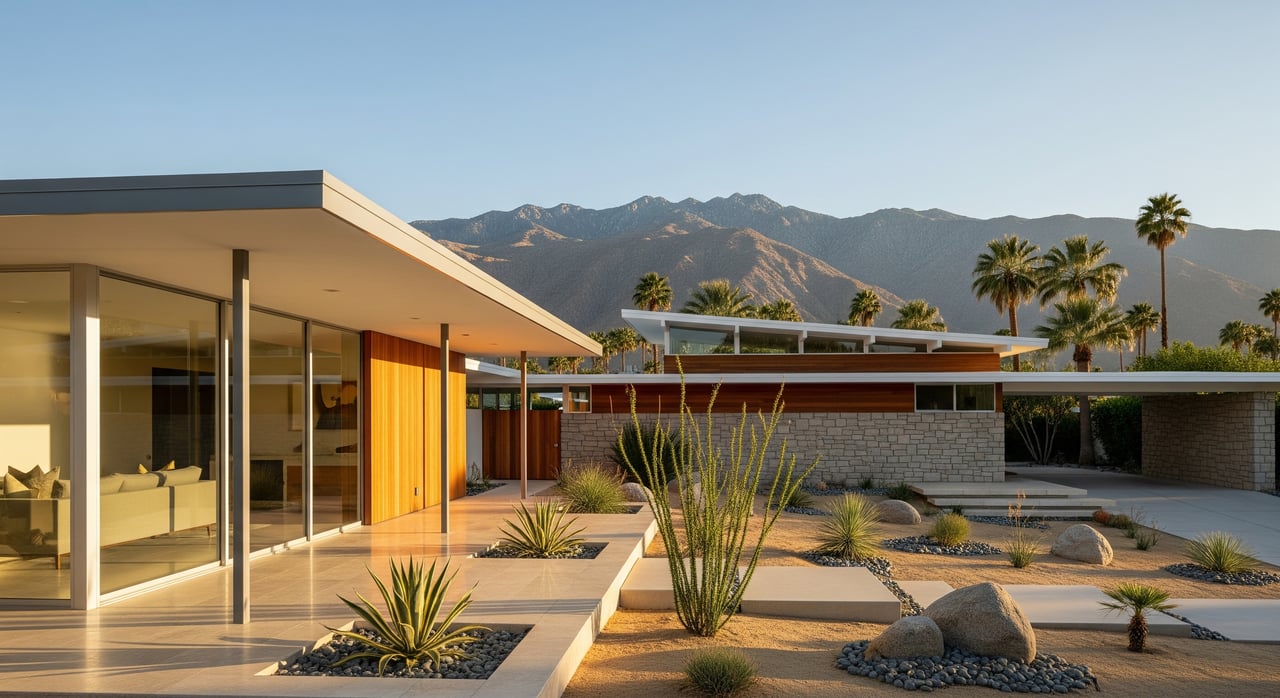
Is Desert Modernism just another way to say mid‑century? In Palm Springs, the terms overlap, but they are not identical. If you love glass walls, clean lines, and indoor‑outdoor living, understanding the difference helps you evaluate homes, plan renovations, and protect value. In this guide, you’ll learn how to spot Desert Modernism, where to look in Palm Springs, and what choices matter most when you buy or sell. Let’s dive in.
Quick definitions in Palm Springs
Mid‑Century Modern, in a nutshell
Mid‑Century Modern covers architecture and design from roughly the 1930s to the 1970s. You see open plans, simple forms, minimal ornament, and new materials like steel, glass, and concrete. It ranges from high‑design custom homes to tract models, ranch houses, and split‑levels. In California, it includes everything from Case Study houses to Eichler‑style tracts.
What Desert Modernism means here
Desert Modernism is Palm Springs’ regional expression of Mid‑Century Modern. It is tailored to the Colorado Desert’s sun, heat, and landscape. You will find deep overhangs, shaded courtyards, breezeways, and patio‑centric plans designed for cross‑ventilation and comfort. These homes often integrate boulders, native plantings, and site orientation as core design features. Many Palm Springs homes are both Mid‑Century Modern and Desert Modern at the same time.
What you’ll notice from the street
Floor plans and orientation
- Desert Modern homes favor single‑story linear or L‑shaped layouts that frame mountain views and create shaded outdoor rooms.
- Courtyard‑centric plans are common, offering privacy and usable shade in the hottest hours.
- Sliding glass walls connect living spaces to patios and pools for a seamless indoor‑outdoor flow.
- Orientation matters. Designers leveraged sun angles and breezes, then added deep eaves and screens to control heat.
Materials and climate responses
- Expect concrete slabs, stucco, steel framing, and local stone, often left honest and exposed.
- Aluminum or steel window systems, clerestory windows, and exposed beams are typical.
- Shade devices like brise‑soleil, perforated screens, and carports replace heavier, enclosed garages.
- Interiors often feature terrazzo or polished concrete floors and simple, clean‑lined cabinetry and hardware.
Site and landscape cues
- Pools sit where solar exposure is ideal but privacy remains intact.
- Landscapes lean xeric with palms, agave, and yucca, or stylized mid‑century plantings.
- Natural rock formations and desert topography are often part of the composition.
Signature architects and neighborhoods
Architects to know
- Albert Frey: An early desert pioneer. His Frey House I and II are Palm Springs icons.
- Richard Neutra: His Kaufmann Desert House is a model for climate‑tuned modern living.
- E. Stewart Williams: Celebrity commissions and civic buildings across Palm Springs.
- William Krisel: Tract modern master with butterfly roofs and clerestories.
- Donald Wexler: Known for innovative steel‑framed houses.
- John Lautner: Dramatic sculptural work, including the Elrod House.
- Alexander Construction Company: Developers behind many beloved tract neighborhoods.
Where to explore
- Twin Palms and Vista Las Palmas: Rich with architect‑designed homes and notable estates.
- Movie Colony and Movie Colony East: Historic enclaves with many period properties.
- Deepwell Estates and Racquet Club Estates: Tract modernism and modular repetition at scale.
- Indian Canyons and foothill areas: Homes that engage boulders, slopes, and dramatic views.
Value and authenticity in Palm Springs
What often commands premiums
- Provenance matters. Documented architects and original plans build confidence.
- Intact features like clerestory windows, terrazzo floors, exposed beams, and original hardware are prized.
- Thoughtful updates that preserve the design language resonate with buyers.
Smart updates vs. heavy overhauls
- “Museum‑quality” preservation can attract collectors but narrows the pool.
- Reversible, sympathetic upgrades usually protect value better than gut remodels that erase character.
- Most buyers still expect modern systems, especially HVAC, electrical, and efficient glazing.
Historic designation and incentives
- Local designation can add prestige and enable design review that protects character.
- Some designated properties may be eligible for programs like the Mills Act, which can offer property tax relief when you follow preservation commitments.
Renovation realities in the desert
Building envelope and energy
- Original single‑pane glass and limited insulation are common. Comfort upgrades help without changing the look.
- Consider interior storm panels, compatible low‑E retrofits, visually similar high‑performance glazing, and discreet roof insulation.
Structure, roofs, and systems
- Flat or low‑slope roofs need vigilant maintenance. New membranes, improved drainage, and added insulation are frequent investments.
- Steel posts and window frames can corrode and require specialist repair.
- Aging HVAC and electrical panels often need replacement to meet code and expectations.
Hazardous materials
- Asbestos in older roofing or flooring and lead paint are possible in mid‑century homes. Standard testing and abatement are wise early steps.
Kitchens and baths
- Keep the architecture readable. Clean‑lined cabinetry, simple tile, and period‑appropriate hardware keep rooms fresh without losing the mid‑century feel.
Landscape and water use
- Converting lawns to xeriscape aligns with the climate and the Desert Modern aesthetic.
- Evaluate pools for leaks, heating, and filtration performance as part of due diligence.
Buyer checklist for Palm Springs modern homes
- Verify provenance. Ask for architect, builder, original drawings, permits, and historic photos.
- Inspect roof condition, window frames, and glazing. Look for corrosion at steel or aluminum.
- Review HVAC, electrical, and plumbing upgrades for capacity and code compliance.
- Check slab conditions, pool equipment, and any past additions for compatibility with the original plan.
- Ask about historic designation and any incentives or review requirements.
- Hire inspectors and contractors who understand steel, specialty windows, terrazzo, and concrete work.
Seller strategy and staging that works
Prep the right way
- Highlight character‑defining elements like clerestories, exposed beams, terrazzo, built‑ins, and original hardware.
- Choose reversible kitchen and bath updates that echo original lines and finishes.
- Assemble a provenance package with plans, photos, restoration notes, and receipts. This builds trust and can support premium pricing.
Stage for indoor‑outdoor living
- Keep a neutral palette with desert tones and natural textures like teak, leather, and wool.
- Use mid‑century silhouettes sparingly to set the mood without overshadowing architecture.
- Dress patios as real rooms. Include shade, dining, and a simple seating area by the pool.
- Keep lighting simple and modern. Leave original fixtures when attractive or replace with faithful reproductions.
Touring Palm Springs modern architecture
When to visit
- Spring and fall offer milder weather. The annual Modernism Week is a prime time for tours and talks.
Where to find tours and resources
- Look to Modernism Week, the Palm Springs Art Museum Architecture & Design Center, the Palm Springs Modern Committee, and the city’s historic preservation office for guided tours, maps, and inventories.
- Mix custom architectural landmarks with tract neighborhoods to see how Desert Modernism and broader Mid‑Century Modern overlap and differ in practice.
How we help
You want more than a style lesson. You want the right house, a smooth process, and a result that holds its value. Our team pairs boutique, concierge service with strategic reach to connect you with authentic properties, guide smart updates, and market provenance with clarity. We also engage a cross‑market network that includes San Francisco capital and design‑savvy buyers who value Palm Springs’ modern legacy.
If you are considering buying or selling a Desert Modern or mid‑century home in Palm Springs, let’s talk about a plan tailored to you. Request a Private Consultation with Montecito Luxury Group.
FAQs
What is the key difference between Desert Modernism and Mid‑Century Modern in Palm Springs?
- Desert Modernism is a regional subset tuned to sun, heat, and landscape with deep overhangs, courtyards, and breezeways, while broader Mid‑Century Modern spans many styles and regions.
Which architects should I know for Palm Springs Desert Modern homes?
- Albert Frey, Richard Neutra, E. Stewart Williams, William Krisel, Donald Wexler, John Lautner, and the Alexander Construction Company are central figures.
What neighborhoods have strong mid‑century concentrations in Palm Springs?
- Twin Palms, Vista Las Palmas, Movie Colony and Movie Colony East, Deepwell Estates, Racquet Club Estates, and Indian Canyons are well known for period properties.
Do historic designations restrict renovations on Palm Springs modern homes?
- Designation often adds design review for exterior changes and can open incentives like the Mills Act, so plan updates with qualified preservation professionals.
Which updates best preserve value in a Palm Springs mid‑century home?
- Reversible, sympathetic upgrades that keep key features intact and modernize systems usually protect value better than full gut remodels.
What should I inspect before buying a Desert Modern home?
- Focus on roof and drainage, glazing and window frames, HVAC and electrical capacity, slab conditions, pool systems, and any prior additions for compatibility.